
Two reusable filters, two very different mechanisms
If you’re comparing washable air filter options, the two you’ll meet most often are electrostatic filters and permanent metal filters. Both are reusable. They work differently, and each is better at different jobs. Here’s the plain-English comparison.
What Does “Electrostatic” Mean in an Air Filter?
An electrostatic air filter uses static electricity to attract particles. As air passes through layers of synthetic media, friction creates a static charge that pulls dust, pollen, and lint out of the airstream — the same effect that makes a balloon stick to a wall. No wiring is involved; the charge comes from the airflow itself.
Don’t confuse passive electrostatic filters with powered electronic air cleaners — those are a different device that uses an external power supply to charge collection plates.
How Permanent Metal Filters Work
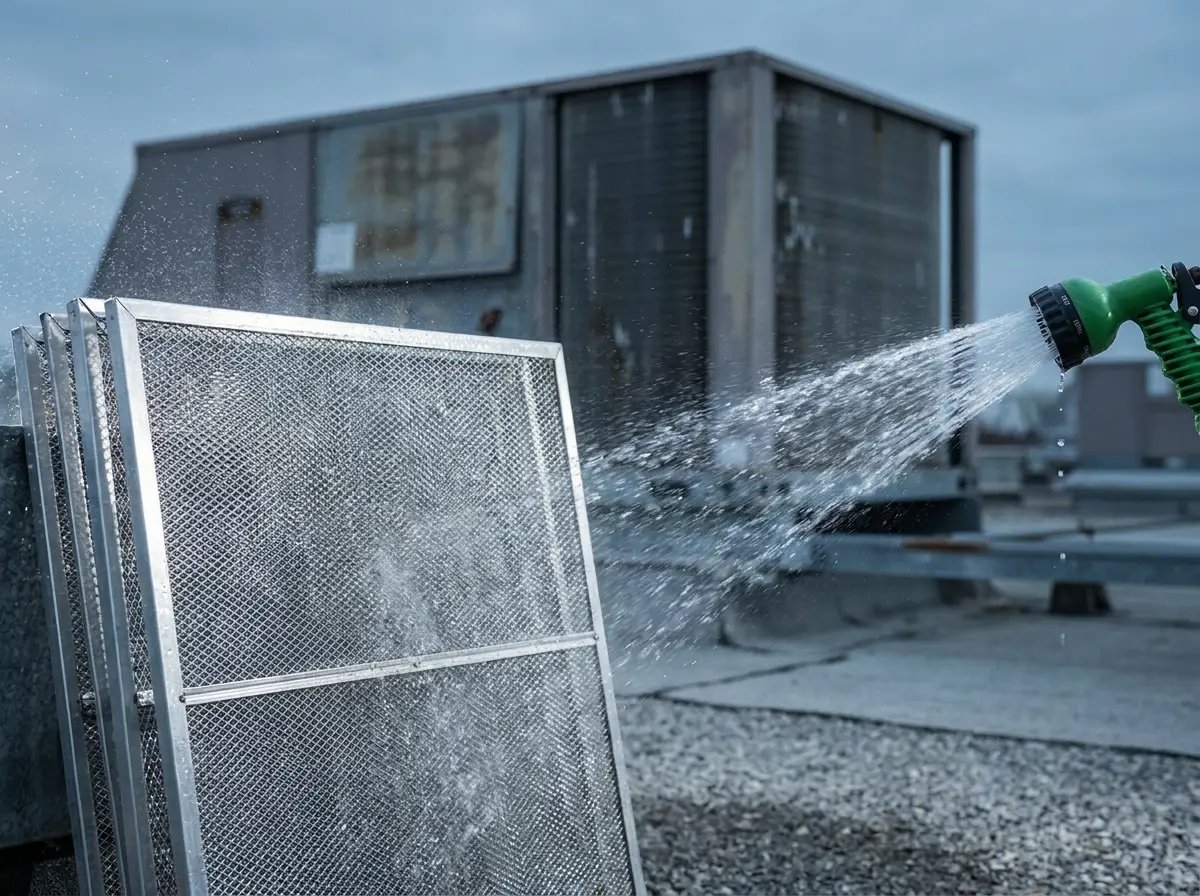
Permanent metal filters capture particles by impingement: air forced through layers of metal media changes direction repeatedly, and particles stick to the adhesive-coated media. All permanent metal air filters, regardless of manufacturer, have an adhesive (tackifier) applied after cleaning — that is what makes metal filters effective.
Construction is aluminum, galvanized, or stainless steel. Washed at least once per month, a permanent metal filter lasts at least 5 years — often longer with proper servicing.
Head-to-Head
| Electrostatic (washable synthetic) | Permanent metal (Airsan) | |
|---|---|---|
| How it captures | Static charge attracts particles | Impingement — particles stick to adhesive-coated metal media |
| Moisture & oil in airstream | Static charge is the mechanism; synthetic media | Metal construction with mist-eliminating options that coalesce and drain moisture |
| Heat & vibration | Synthetic media | Metal construction used in turbine generators, power plants, offshore rigs, and military vessels |
| Custom sizes | Varies by maker | Any size requirement |
| After cleaning | Rinse and reinstall | Wash, dry, recharge with tackifier adhesive, reinstall |
When an Electrostatic Filter Makes Sense
For residential and light-commercial furnace or return-air comfort filtration in dry, clean environments, a washable electrostatic filter is a reasonable choice — especially as an upgrade from disposable fiberglass panels. The airflow keeps the media charged, and rinsing it restores capacity.
When Permanent Metal Wins
Permanent metal is the choice for demanding industrial environments — engines, compressors, blowers, generators, and process equipment. It handles airstreams carrying water droplets or oil mist, where the Type AFD coalesces and drains them, and high-velocity applications like turbine generators, power plants, wind turbines, offshore oil rigs, and military vessels — see the Type W. And anywhere the filter must be washed aggressively and returned to service for years, washable metal filters deliver — in any custom size.
Frequently asked questions
What does electrostatic mean?
Are electrostatic air filters washable?
How long do permanent metal filters last?
Why do metal filters need adhesive after cleaning?
Running an industrial or commercial system?
Tell us your application and Airsan will recommend the right washable metal filter.